Cardio Benefits Guide
Recovery Between Cardio Sessions: Timing and Nutrition
Recovery isn't downtime—it's where your body repairs, replenishes, and adapts after cardio. This guide covers the timing, nutrition, hydration, and sleep habits that determine whether you show up stronger for your next session.

You've committed to the 8 Week Transformation Challenge. You're pushing hard in your cardio sessions, and now you're wondering: how do you recover properly between workouts so your effort actually counts? Recovery isn't downtime. It's when your body repairs muscle tissue, replenishes energy stores, and adapts to the stress of exercise. The difference between a session that moves you forward and one that stalls your progress often comes down to what happens in the hours after you finish.
This guide walks you through the science-backed steps to recover effectively between cardio sessions, so you can show up ready for your next workout.
Introduction: Why Recovery Between Sessions Shapes Your Results
You've pushed hard in a cardio session, felt great, and now you're wondering how to keep that momentum going.
This is the critical moment. What you do now, how you eat, hydrate, rest, and move, directly affects your readiness, your soreness, and your ability to perform when you step back in for the next session. Research published in the Journal of Sports Sciences (Burke et al., 2004) shows that recovery needs vary based on exercise intensity, duration, and your individual fitness level.
Higher-intensity or longer cardio sessions demand more deliberate recovery work. You're putting in the effort over 8 weeks; the payoff depends on getting this right between sessions.
Why It Matters: Recovery Is Where Adaptation Happens
Recovery isn't passive rest.
It's the active process your body uses to rebuild itself after stress. When you finish a cardio session, your muscles have depleted their glycogen stores, the stored glucose your muscles use for fuel. Your muscle fibres have experienced microscopic damage. Your nervous system is fatigued.
None of this is bad. It's the stimulus. But what happens in the next 24 to 72 hours determines whether you come back stronger or weaker.
Adequate recovery replenishes the glycogen stores you need for your next session, triggers muscle protein synthesis (the process by which your body repairs and builds muscle tissue), reduces the severity and duration of Delayed Onset Muscle Soreness (DOMS), that muscle pain and stiffness that often peaks 24-72 hours after intense exercise, maintains hydration and electrolyte balance, and supports hormone regulation and immune function. Without proper recovery, you risk underperformance, increased injury risk, and slower progress toward your transformation goals. This is especially true if you're stacking multiple cardio sessions in a week or combining cardio with strength work, as many participants do in their weekly routine alongside warming up and stretching before workouts.
Post-Cardio Nutrition: Timing and Macros
The "anabolic window", that narrow 30-60 minute slot when your muscles are supposedly primed to absorb nutrients, has been overstated.
A review in the Journal of the International Society of Sports Nutrition (Aragon & Schoenfeld, 2013) found that the window is much wider, extending several hours. This is good news: you don't need to force-feed yourself immediately after a session.
Carbohydrates: Studies in Medicine & Science in Sports & Exercise (Ivy, 1998) showed that consuming carbohydrates post-exercise replenishes muscle glycogen stores, which are crucial for energy in your next workout. Aim for complex carbohydrates like oats, rice, or wholemeal bread in your recovery meals. The 8WTC app's flexible calorie and macro targets can guide you toward the right amount for your body and goals, similar to the approach outlined in Nutrition & Macro Targets: Flexible Dieting for 8 Weeks.
Protein: The American Journal of Clinical Nutrition (Phillips et al., 2009) demonstrated that protein intake after exercise stimulates muscle protein synthesis, aiding repair and adaptation. Aim for a good source of lean protein, chicken, fish, eggs, or a plant-based alternative, in your post-cardio meal.
Practical example: after a hard cardio session, a recovery meal might look like grilled chicken breast with jasmine rice and steamed broccoli, or scrambled eggs on wholemeal toast with avocado. Timing within a few hours is what matters; exact minutes aren't.
Hydration Throughout the Day
The British Journal of Sports Medicine (Shirreffs & Maughan, 2000) emphasises that dehydration impairs both recovery and subsequent performance.
Your body loses fluid during cardio through sweat; replace it before, during, and after your session. Don't wait until you feel thirsty. Thirst is a late indicator of dehydration.
Drink water steadily throughout the day, and increase intake around your workouts. This supports nutrient delivery to your muscles and helps clear metabolic waste.
Sleep: The Non-Negotiable Recovery Tool
A review in Sports Medicine (Vitale et al., 2019) found that adequate sleep is fundamental for muscle repair, hormone regulation, and overall recovery.
During deep sleep, your body increases protein synthesis and releases growth hormone, both essential for adaptation after cardio. Aim for 7-9 hours of quality sleep each night.
It's not just about the workouts; it's about the recovery in between. Poor sleep stacks against you, it impairs performance, increases injury risk, and slows progress.
Active Recovery: Light Movement on Rest Days
A study in the Journal of Strength and Conditioning Research (Dupuy et al., 2018) found that light, active recovery, like walking or gentle cycling, can reduce muscle soreness and improve blood flow, aiding nutrient delivery to muscles.
On your non-cardio days or after intense sessions, consider a short, easy walk. Twenty to thirty minutes at a conversational pace.
It's not another workout; it's recovery. The goal is movement, not exertion.
Practical Steps: Your Recovery Checklist
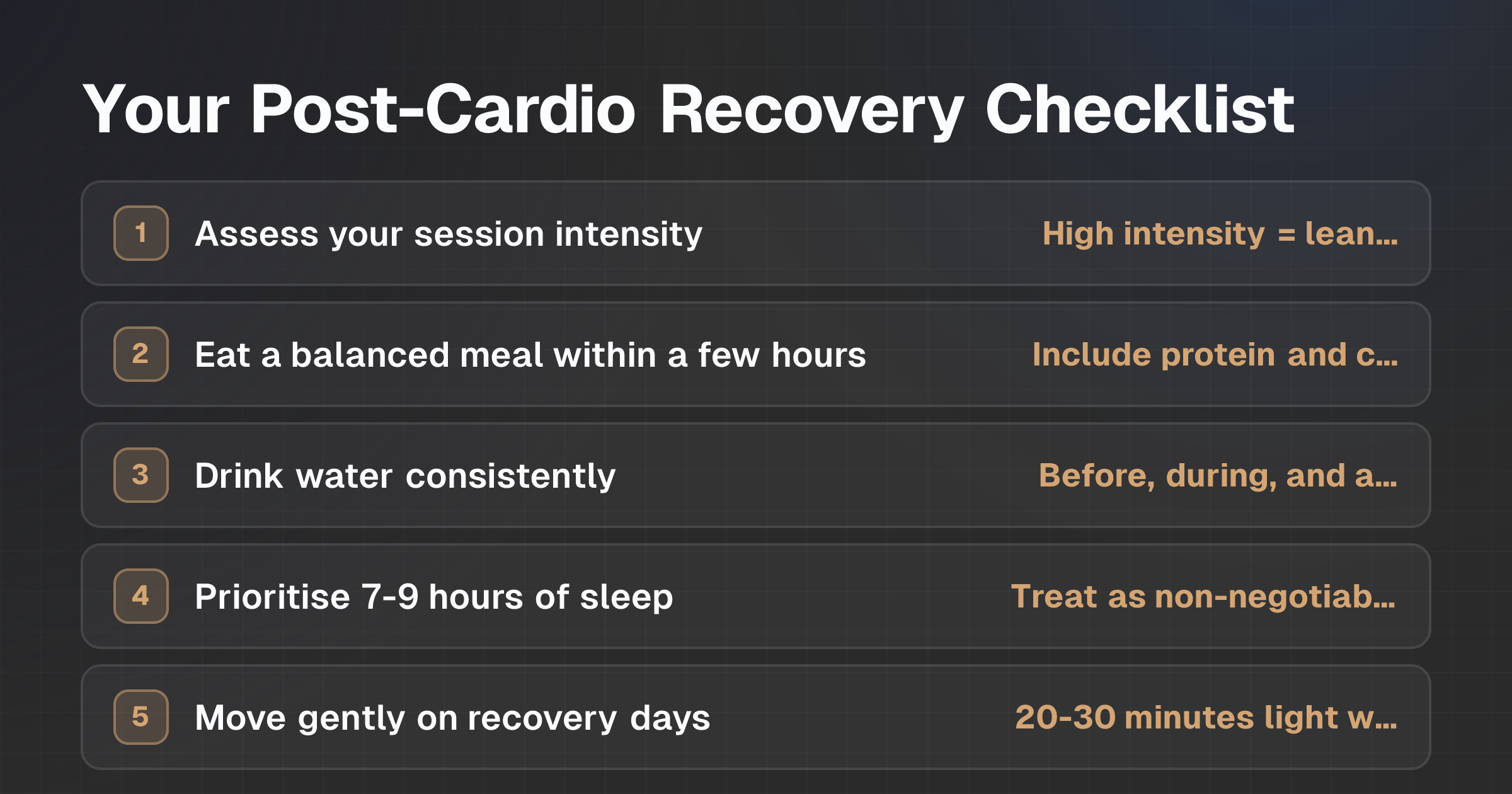
Assess your session intensity. Did you push hard? Then lean into the recovery steps below. A steady, moderate cardio session requires less deliberate recovery than a high-intensity interval session.
Eat a balanced meal within a few hours. Include protein and carbohydrates. Use the 8WTC app's macro targets to hit your goals without overthinking portion sizes.
Drink water consistently. Before, during, and after your session. Keep a water bottle with you throughout the day.
Prioritise sleep. Treat 7-9 hours as non-negotiable, not as something to sacrifice for "productivity."
Move gently on recovery days. A walk counts. Intense recovery workouts defeat the purpose.
Watch for common mistakes:
Under-fuelling: Not eating enough carbohydrates and protein after cardio slows recovery and hinders progress. You're working hard; give your body the fuel it needs.
Ignoring hydration: Dehydration makes everything harder, from performance to recovery.
Skipping sleep: Your body repairs itself when you rest. Don't short-change your results by sacrificing sleep.
Overdoing active recovery: "Active" doesn't mean another intense workout. Keep it light.
Chasing supplement shortcuts: Focus on whole foods first. The 8WTC nutrition guidance prioritises balanced eating, not quick fixes.
Many 8WTC participants use the flexible calorie and macro targets to dial in their post-workout nutrition consistently. Craig, one of the documented winners featured in Real 8WTC Winner Transforms in 8 Weeks, lost 86 lbs over his transformation and showed how simple, consistent fuelling supports real results.
Key Takeaways
Recovery isn't downtime; it's where your body adapts to cardio stress and prepares for your next session.
Post-exercise nutrition matters, but the window is wider than once believed, aim for a balanced meal with protein and carbs within a few hours. Hydration, sleep, and light active movement are just as important as food for recovery.
Common recovery mistakes, under-fuelling, dehydration, poor sleep, and over-aggressive "active recovery", can stall progress faster than the workouts advance it. Consistency in recovery habits, tracked via the 8WTC app's macro targets and your sleep log, compounds over 8 weeks and separates transformations from plateaus.
For more on how to structure realistic recovery into your weekly routine, see Practical Recovery Protocols That Fit Realistic Weekly Schedules for Fitness Enthusiasts. If you're still weighing up whether the programme is right for you, Objection-Busting: Common 8WTC Questions Answered addresses the hesitations that often come up before starting.
General guidance from the 8WTC team, not medical advice. Individual results vary. Always consult your doctor before starting a weight-loss or exercise programme.